Wednesday, 30 March 2016

Assignment Presentation - Micro Teaching (Week 6)

Greetings to everyone. How are you all? I hope you all are great this week. I am great too because I have done with my Assignment 2 for Pedagogy in Education paper. Well, it wasn't turn out to be a good feedback yet I manage to present my level best because i remembered the quote that my lecturer always say to us: 'Even it's a last minute preparation, just give out the best'.

Very well, the assignment question is to do three sets of lesson plan by choosing any of the school of thought that we have learnt in the previous classes. Then, out of that three lesson plans we should choose one and present it to the class by doing micro teaching which means teach as how we planned for 30 minutes in the class. First of all, micro teaching means that we need to teach a small group of students assuming that they are the real school students who are going to face in the future. It helps the students to experience how teaching would be in front of a real classroom environment. 


In my assignment, I have chosen the cognitive school of thought because it was easy to plan the lesson as it requires a lot of thinking skills. I have put in almost all the approaches in my lesson plan and begin with the assignment. The three lesson plans was about English language class with 30 students in it. The students were mixed up with different abilities as seen poor, average and good. I have planned the activities accordingly and I have put in a lot of activities for the students to answer and participate. 

Since i presented about my first lesson plan which is about Friends. I gave the students an activity called Hangman. It was fun playing with my friends assuming that they are the group of secondary school students. 


Ever since, this was my first micro teaching, I was too nervous to stand in front of the classroom as a teacher. Some how, I managed to complete my 30 minutes with whatever I have planned. There were some place where I forgot to give the exact instructions to the students. When I realize it, I thought my world going to end. I was in that kind of situation. 

Finally, my lecturer gave the feedback where I should improve myself and the lesson plan I did. As what she had mentioned I missed some instructions in some places, I didn't really praised my students for giving the correct answers, the fluency wasn't there when I present and I need to improve in my teaching skill because it was totally a teacher-centered teaching approach not student-centered. 

I really appreciated whatever comments that I got from my lecturer because it helps me in some ways to improve myself. That's all about my micro teaching for today. Thank you for spending your precious time by reading my post. Have a nice day. Until we meet again, I'm Durasheeny signing out from the blog. Thank you. 

Thursday, 24 March 2016

Behavioral School of Thought (Week 5)

Hello there. It's me again. You might thinking why am I posting the same school of thought as last week by seeing the title. Wait... Don't judge the book by it's cover. Last week I just talked about the introduction of behavioral school of thought. Today, I am going to talk about the teaching approaches that can be used in behavioral school of thought. So, let's begin.

1. Programmed instruction (PI) - teaching using images.


2. Computer Assisted Instruction (CAI) - use computers to present PI with specific learning tasks. Help to engage students more in drill and practice.


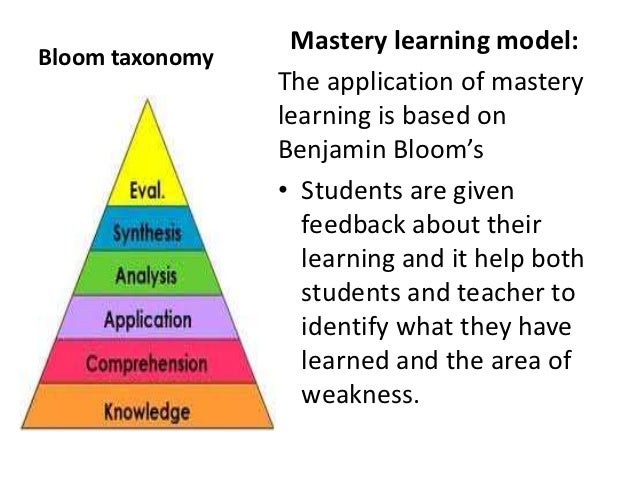
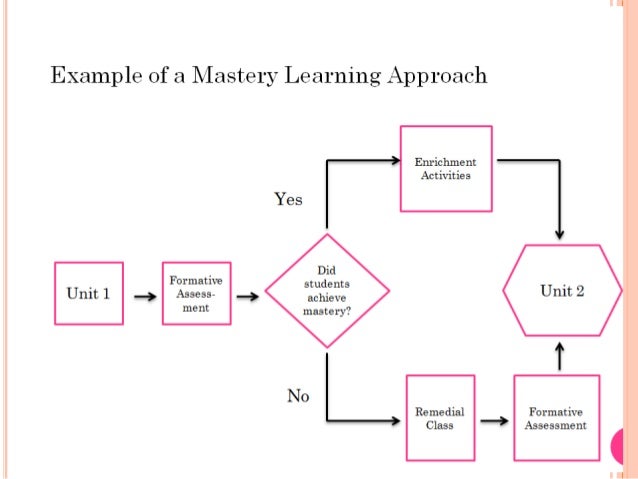
3. Mastery Learning - students should master the knowledge using their interest.


4. Precision Teaching (PT) - learners master the facts and skills by practicing until they reach the highest level. "Practice make perfect". In this case, teachers will be the observer while students learn things themselves.


5. Applied Behavioral Analysis (ABA) - use of reinforcement to encourage students to perform better.
Image result for applied behavior analysis


Well, that is all for today. Yes, it is simple as that. Teaching approaches in behavioral school of thought was what we were facing when we studied in our schools. It's just that we didn't realize about it and we have no idea about it. All we know was teachers teaching whatever they want in order to finish the syllabus. Actually that was absolutely wrong. They did that teaching approaches to attract the students attention as well as teach what we are interested on. Well, its never too late to realize.

Thank you for reading the post. Please leave a comment below if you find this post interesting enough to read through. Will see you in the next post next week with a new title.

Thursday, 17 March 2016

Behavioral School of Thought (Week 4)

Good day everyone. It's me again. I'm so excited to post about the 3rd school of thought which is the behavioral school of thought. I'm sure you are able to guess what is this school of thought all about from the title itself. Yes, it's all about our behavior. In formal, it is the understanding on how our behavior is modified by the environment and why we are behaving in such manner.

Contiguity is a combination of stimulus and response (S-R). It's the connection to one another. For an example, whenever the teacher says the word Eiffel tower, student tend to remember Paris. So, Eiffel tower is the stimulus, whereas Paris is the response.


There are mainly 3 psychologist that we need to remember for behavioral school of thought.

1. Ivan Pavlov - a Russian psychologist who talks about the classical conditioning (old).

2. Federick Skinner - talks about the operant conditioning where teachers will apply reinforcement in their teaching and learning process. For example, student will be rewarded if they do something right in their class.


3. Albert Bandura - stresses on social learning where he belief that student should learn through observational learning. It means that students should learn by watching others. For an example, small kids always will learn through observing their parents. Whatever the parents say/do,the kids will follow (modelling).


We have also did a short activity on reviewing whatever we have learn for the past 2 weeks about the 3 school of thought. I did a mind map and explained about it.Whereas my friends did it in their very own way and explained about it. From there, our lecturer tend to see what we have understand so far and how can we improve ourselves in explaining things.


That is all for this week. We will meet again next week by words. Until then I am Durasheeny, signing out from this blog. Hope you have enjoyed reading my post and it is helpful for you. Thank you and have a pleasant day.

Friday, 11 March 2016

Humanistic School of Thought (Week 3)

Hi, everyone. It has been a hectic day after all. Let me introduce to you the 2nd school of thought which is Humanistic. What is humanistic? A you can see in the word itself it's about human or shall i say ourselves. Humanistic school of thought focus on social and emotional learning. It's about the understanding on how we develop feelings, attitudes and value about oneself and others. Through this school of thought, student will feel better about themselves and also others. Teachers need to accept each student as an unique person and understand their feelings and ideas. There are mainly two persons who we need to remember when it comes to humanistic school of thought. They are Abraham Maslow(Hierarchy of Needs) and Carl Rogers(Freedom).


There are several beliefs of the humanistic school of thought:

1. Having good feelings about oneself is essential to positive personal development and may enhance academic achievement.
2. Having good feelings about others is also essential to healthy development.
3. The school should be made to fit the child rather than the child made to fit the school (Neil, 1969).
4. The school and classroom environment must help youth satisfy such essential human needs (Maslow, 1998).
5. Accept learners as they are (Rogers & Russell,2002).
6. Place yourself "in the shoes" of learners in order to see and understand a learning situation from the students' perspective (Combs,1965).
7. Use techniques that help learners better understand their feelings and values.
8. Knowing how to learn is more important than acquiring knowledge.

The humanistic approaches to teaching and learning:

1. Project method - kids pursue their own learning interest.

2. Cooperative learning - kids share, accept, & respect each others ideas ("all for one, one for all").

3. Inviting school success (agreement) - get teachers to communicate to learners by knowing learners' name, have individual contact with each learner, show some respect (give and earn), be honest with learners and themselves, not take a student's rejection personally (be more professional rather than take it personally) and respect themselves as teachers.

4. Values clarification - technics of how teachers make the student feel and value.

5. Moral education - education of constructing (character, values, citizenship), being more responsible both in and out of school.

6. Multi-ethnic education(study about value of other cultures) - know their culture as well as other cultures (ideas, customs, skills, arts and so on). This education helps the students to avoid culture shock when they are out of the school environment.


That's all for today. Hope that humanistic school of thought makes you realize whatever you have studied previously in school does have it's meaning and importance. Thank you for spending a part of your precious time to read this post. Have a nice day. 

Wednesday, 9 March 2016

Cognitive School of Thought (Week 2)

Hi everyone. It’s me again. It has been quite long for me to come back here because of some personal and technical problems. Thousands of apologize for that. Well, let’s start with the topic of the 2nd week that I have learnt in my Pedagogy in Education class. From the title above itself you would get the hint. Yes, it is all about the Cognitive school of thought. Many of you might be thinking what is this cognitive school of thought? Let me tell you. The cognitive school of thought is a branch of psychology that studies about our mental processes, which means the focus is more on how people obtain, process and store information. Cognitive school of thought involves human intelligence, language, thinking and problem solving, memory, attention and perception. When comes to Cognitive school of thought, we must remember of Jean Piaget, the psychologist who came up with the theory of cognitive development.


Information processing and meaningful learning are the main two things that I have learnt in the previous class.

Information processing theory focus on internal mental process which leads to the external behavior. This theory seeks to understand how people acquire new information, how they store information and recall it from the short-term memory, and the way what they already know (long-term memory) guides them, as well as how they will learn.

Long-term memory


Short-term memory

Meaningful learning is the idea how a person can construct their own understanding out of the world’s understanding. It is often collaborative because we naturally work in learning and gain knowledge by communication, manipulating each other’s skills and adopting each other’s knowledge.

There are also four main teaching approaches in cognitive school of thought:

1.      Authentic learning- learning about real life.

2.      Scaffolding- learn through guidance and support. 

3.      Reciprocal teaching (Ret)- learn through communication.


4.      Problem solving- learn through giving ideas to solve the problem. 

Wednesday, 2 March 2016

Myself, Goals and Philosophy

Hello everyone. Welcome to my mini world which is the blog, of course. Well, my name is Durasheeny Shanmugam. I was born on the 18th July 1994 which makes me to turn 22 this year. Officially, I am a citizen of Penang which means I was born and raised in Penang for almost 22 years by my beloved parents. I am a very passionate person, especially in arts because that is what I will do whenever and wherever I am in this world. Specifically, I love to do drawing whether it’s on a piece of paper or on a person’s body. It also known as Henna, the Indians traditional art. I love myself to be surrounded with food and music. These are the two things that can never be separated from me because they make me feel better when I am sad, happy or stress. Everyone around me knows me very well as I am an open- minded person. I accept criticism as the way it is.


So far I have done my STPM and now pursuing Bachelors of Education in UNITAR (Penang regional center). All this while I thought teaching is just about standing in front of a class and teach. But no doubt after pursuing this course I found that there are lots of work that need to be accomplished by a teacher behind the scene. Well, it is not as easy as I thought it would be. As my semesters goes on for this course, I started to learn more things about teaching such as the skills that a teacher need in herself in order to be more effective and make the classroom an effective place for the students to learn.

In the first place, I chose teaching because it was my parents dream that they wanted to see me as a teacher. To be honest, it wasn’t my cup of tea. But then as time goes on, I really got inspired by some of my former teachers who taught me in my secondary school where they made teaching as a fun thing to do with the students’ involvement. After that, my lecturers who taught me for the past two semesters had given me an opportunity to see what teaching life looks like. Thanks to them. There are ups and downs in their lives yet they still managed to give the best education to the students who are depending on them. They have really given a great impact and inspiration in my life to become a teacher.


The goals that I would like to achieve in the future is to complete my degree life successfully and become a teacher in a school obviously. This is mainly to gain my self-confident and also to gain more experiences in teaching that I would probably need in order to continue my Masters in Education. As I know, age is not a matter to get education. It is just the initiative and opportunity that we can grab at the moment. Not everyone can be a good teacher and not everyone can be a good learner. It is all depend on ourselves in which category do we want to fall. I am eagerly waiting for the moment where I can open my very own tuition center as well as a private school where all the children can get free education and strives for excellence among them. Of course, I need the help of the NGOs. I would also love to adopt few kids from poor family and help them out in terms of education and physiological needs. I also really want to share whatever I have learnt before and after being a teacher to my students.

As a teacher, one must have a philosophy which she thinks that gives a meaning to her teaching and learning process. As for me, I would most probably choose experimental-ism. The reason why I chose this because I certainly believe that each and every classroom we might enter will be a place to do some experiment. It can be the abilities of the students, the way the students learn things and the pedagogy skills that we going to use is effective or not. As a person who always do experiment, I couldn’t just stand in one place and teach as well as for the students. I will certainly make the classroom a fun place to learn and let the students to open their hearts and voice out their opinions about me, the subject as well as the activities that I might conduct in their class. Feedback can really help myself to improve myself and the skills that I am going to use in the future. As an experimentalist, I will be more precise in student-centered learning process rather than me being the strict rule who controls the entire classroom for the entire period. It will be more fun and the students will be more excited to learn more.


I really hope that you had a great time reading my post. Please do leave a comment if you really think that this blog is being helpful for you or the mistakes I have done. Thank you so much and have a marvelous day ahead.